

The Necessary Complement to Any Real Estate Transaction in Spain
Buying real estate in Spain is exciting. It may be the start of a retirement dream, a family relocation, a holiday home lifestyle, or a long-term investment. But it is also a serious legal, financial, and technical decision.
Most careful buyers already know one thing: having a lawyer is a smart move.
And that is absolutely true.
A good property lawyer in Spain can make the buying process safer, clearer, and far less stressful. Lawyers help buyers navigate contracts, legal checks, taxes, notary procedures, and registration. For international buyers in particular, that support is often essential.
But there is one crucial truth many buyers only realize too late:

A lawyer usually cannot tell you what is physically wrong with the property.
That is where iNMOspector comes in.
We are not here to replace your lawyer.
We are here to complement your lawyer with the one thing legal paperwork cannot provide on its own:
real-world, physical information about what is actually built, how it is built, and what condition it is in. iNMOspector’s services include technical inspections, legal property reports, valuations, energy certificates, pest diagnosis, and buying support, all designed to make property transactions in Spain calmer and safer.
First, give the lawyer the credit they deserve
Let’s be clear: a lawyer is one of the most valuable professionals a property buyer in Spain can hire.
Here are five positive effects a good lawyer has for the real estate buyer in Spain:
1. A lawyer verifies ownership and legal status
Before you commit to a purchase, a lawyer can review documentation to confirm who legally owns the property and whether the seller has the right to sell it. They also review land registry information and other core legal documents.
2. A lawyer checks for debts, charges, and legal risks
A property may look beautiful and still carry hidden legal problems. Lawyers help identify mortgages, liens, registry charges, ownership disputes, and other encumbrances that could create serious trouble after purchase.
3. A lawyer reviews and negotiates contracts
In Spain, the reservation agreement and especially the contrato de arras can have major financial consequences. A lawyer helps draft, review, and negotiate these documents so the conditions are clear and your interests are protected.
4. A lawyer guides you through taxes, compliance, and administration
Property purchases in Spain involve taxes, deadlines, and administrative requirements. A lawyer can help with tax planning, compliance, filings, and practical steps such as NIE support, bank account setup, or acting by power of attorney where needed.
5. A lawyer coordinates completion and registration
From notary signing to land registry registration, a lawyer helps the transaction move correctly through the final legal stages and reduces the risk of costly procedural mistakes.
So yes: bring a lawyer onto your side.
That is not the debate.
The problem: legal certainty is not the same as physical certainty
A lawyer mainly works with documents, records, clauses, rights, obligations, and procedures.
That is exactly what they are supposed to do.
But the building itself is another reality.
A house, apartment, finca, warehouse, or commercial unit is not just a legal object. It is also a physical structure with materials, installations, defects, wear, moisture behavior, structural logic, previous alterations, and maintenance history.
And in many transactions, the lawyer simply does not inspect that physical reality in person.
Even when a lawyer does visit a property, it is generally not their professional task to assess:
structural integrity
technical installations
roof condition
façade deterioration
dampness and mould risks
insulation performance
construction quality
hidden defects
actual built volume versus documentation
likely renovation costs
That is not a criticism. It is just a difference in professional expertise.
A lawyer protects your legal position.
An inspector or architect protects your understanding of the real building you are about to own.
What paperwork may not reveal
A file can be complete and still leave major questions unanswered.
For example:
- The extension may appear harmless in a sales listing, but does its built volume match what is documented?
- The roof may look acceptable in photos, but is there long-term deterioration, patch repairs, water entry risk, or structural weakness?
- The walls may look freshly painted, but is that cosmetic work hiding humidity, salts, cracks, or mould?
- The heating, electrical, or plumbing may “work today,” but are they safe, compliant, efficient, and close to requiring replacement?
- The plot boundaries may seem obvious on site, but does the physical occupation correspond to what the records suggest?
These are not small details. These are the kinds of issues that can change:
your negotiation power
your renovation budget
your resale value
your timeline
your comfort
your stress level after completion
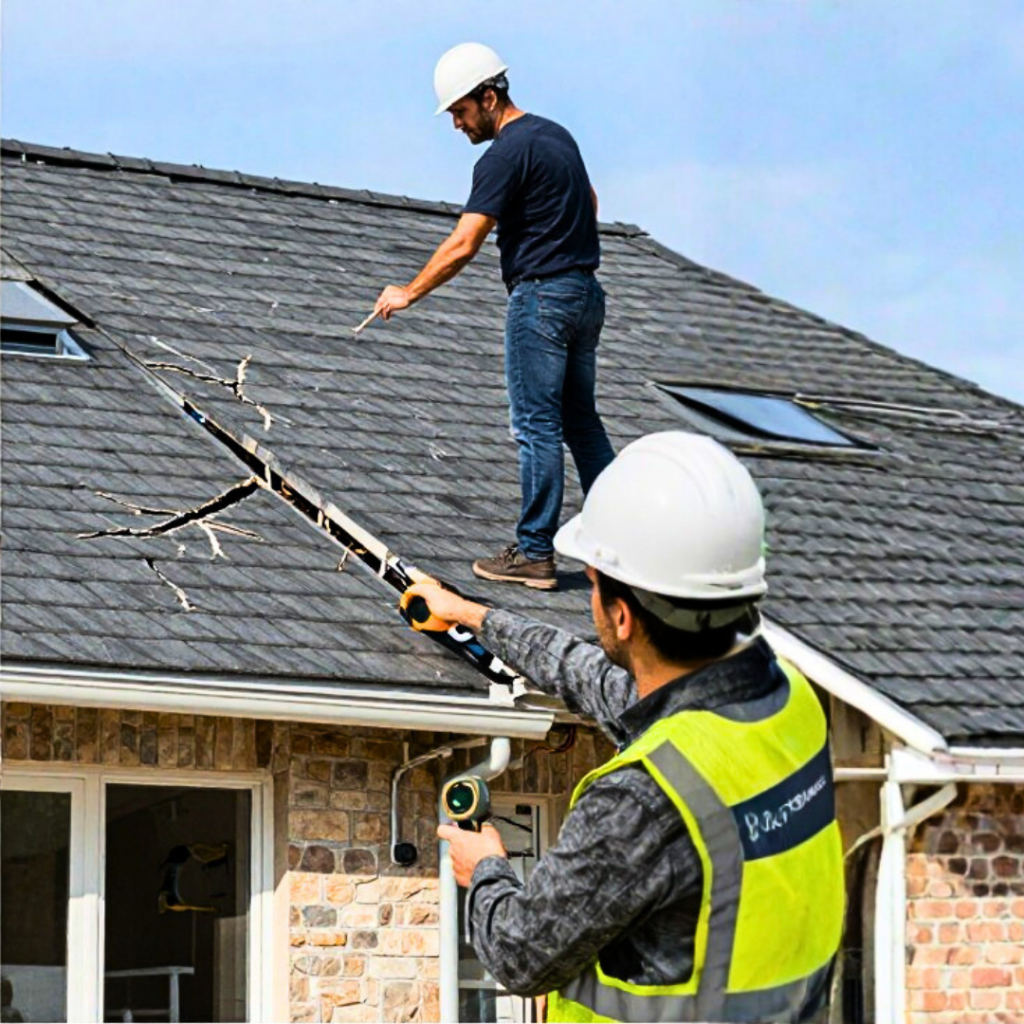
This is where iNMOspector adds the missing half of due diligence
iNMOspector was built around the idea that buyers in Spain need more than paperwork alone. The company positions itself as an independent team helping individuals, families, foreign buyers, and businesses make safer, more predictable purchases, with a nationwide network coordinated from A Coruña.
Our role is to physically look at the property and assess what a legal file cannot fully tell you.
Depending on the case, that can include:
technical property inspection
legal property report
real estate valuation
energy certificate and energy-related assessment
pest diagnosis
renovation and architecture support
buying assistance and coordination with partner lawyers for arras and escritura review.
In practical terms, this means we can help buyers understand:
what is actually built
what condition it is in
what defects matter now
what will likely cost money later
where documentation and physical reality may not fully match
what that means for price negotiation and decision-making
The best transactions are collaborative
The strongest buying teams are not built on rivalry between professionals. They are built on collaboration.
A good lawyer usually appreciates reliable technical information.
And a good inspector appreciates reliable legal guidance.
That combination is powerful.
When lawyer and inspector work together, the buyer gets two essential perspectives:
1. Legal clarity
Who owns it, what rights and burdens exist, what the contract says, and whether the transaction is legally sound.
2. Physical clarity
What is really there, what condition it is in, what may fail, what may be irregular, and what future costs may arise.
That is a much more complete form of due diligence.
Especially important for foreign buyers in Spain
International buyers are often purchasing under time pressure, from a distance, in a second language, and in unfamiliar legal and construction contexts.
That makes the gap between documents and reality even more dangerous.
Photos can flatter. Viewings can be rushed. Agents may not know the technical history. Sellers may be unaware of problems themselves. And many costly issues do not reveal themselves in a quick emotional visit.
This is exactly why independent inspection matters so much.
It turns uncertainty into information.
And information creates better decisions.
One simple principle
Here is the simplest way to put it:
-> Your lawyer reads the documents.
-> iNMOspector reads the building.
You need both.
Because buying property in Spain is not only about whether the transaction is legal.
It is also about whether the property you are buying is physically what you think it is.

Final message
So yes, absolutely hire a lawyer when buying real estate in Spain.
Let them protect you legally. Let them review the arras contract, the ownership documents, the debts, the taxes, the notary process, and the registration steps.
But do not stop there.
Ask a professional inspector to go to the property and physically assess what you are buying.
Ask someone who can see the structure, the envelope, the moisture, the installations, the defects, the alterations, the conservation state, and the likely consequences for your budget and your peace of mind.
Because the smartest buyers do not choose between legal due diligence and technical due diligence.
They combine them.
And that is exactly why iNMOspector is the necessary complement to any real estate transaction in Spain.
Planning to buy property in Spain?
Take a lawyer for the paperwork — and take iNMOspector for the physical reality.
That way, you buy with legal clarity, technical insight, and real peace of min.