


🏘️ What the Rise of Institutional/ Investor Buyers Means for the Spanish Property Market
The Spanish housing market is no longer driven solely by families searching for their forever home. In 2025, a record number of homes in Spain were purchased by companies and investment funds, marking a clear shift in market dynamics. There is actually a public inspection campaign in the works seeking to check 12.000 homes currently owned largely by investment funds for habitability over the next two years. This growing presence of institutional investors is reshaping the residential real estate landscape — with significant implications for private homebuyers, property investors, and renters alike.
In this article, we explore:
Why this shift is happening now
What the data tells us
The potential long-term effects on housing availability and pricing
How individuals can navigate a market increasingly dominated by professional buyers
Don’t feel like reading?
Watch or listen to our explainer video or Podcast!
New option: Listen to a debate contrasting the pros and cons!

📊 Real Estate Market Trends in Spain: Key Figures for 2025
Recent data from Spain’s General Council of Notaries and property portals like idealista.com reveals:
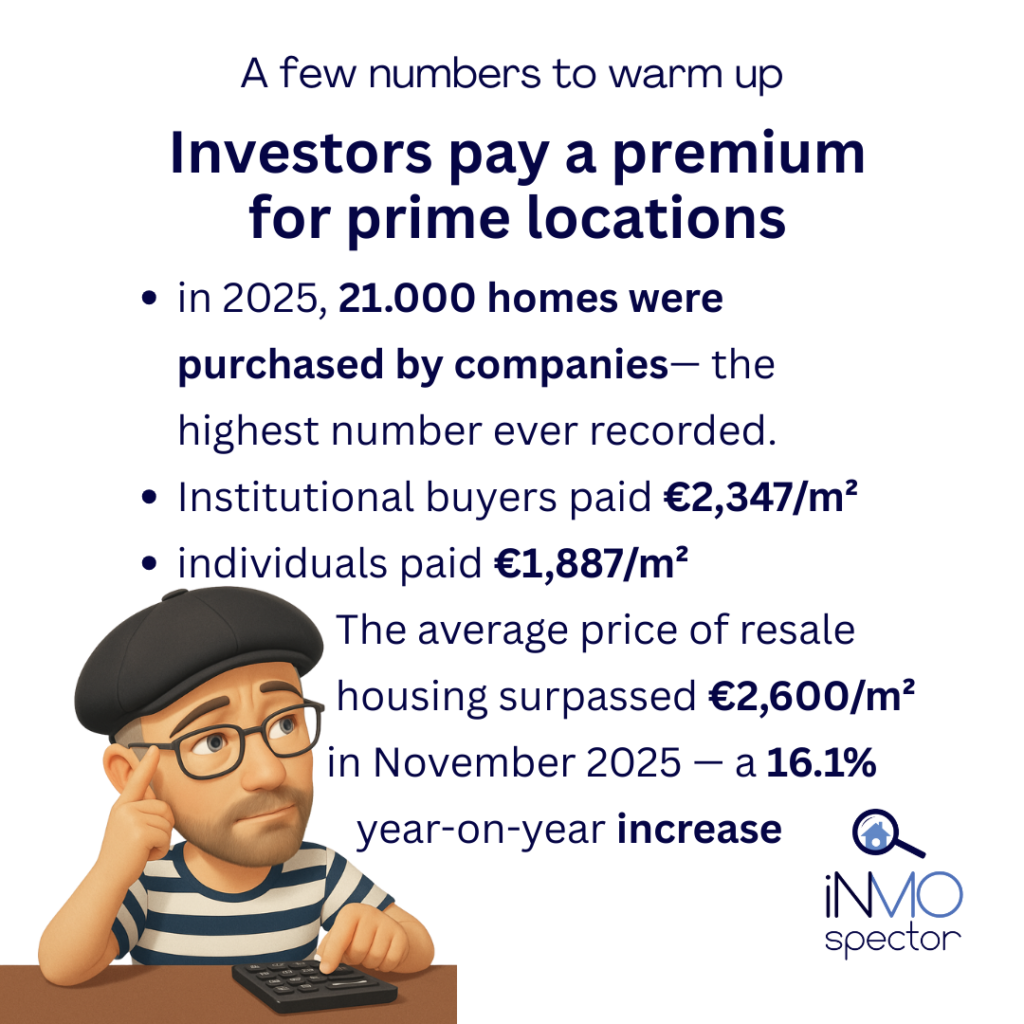
More than 21,000 homes were purchased by companies in 2025 — the highest number ever recorded.
Institutional buyers paid an average of €2,347/m² for properties averaging 136 m².
In contrast, individuals paid an average of €1,887/m² for smaller properties (113 m²).
The average price of resale housing surpassed €2,600/m² in November 2025 — marking a 16.1% year-on-year increase, according to idealista.
This divergence in purchase behavior suggests that corporate buyers are targeting larger, better-located homes, and are willing to pay a premium to secure them.
💼 Why Are Institutional Investors Targeting the Spanish Housing Market?
Several factors have contributed to this shift:
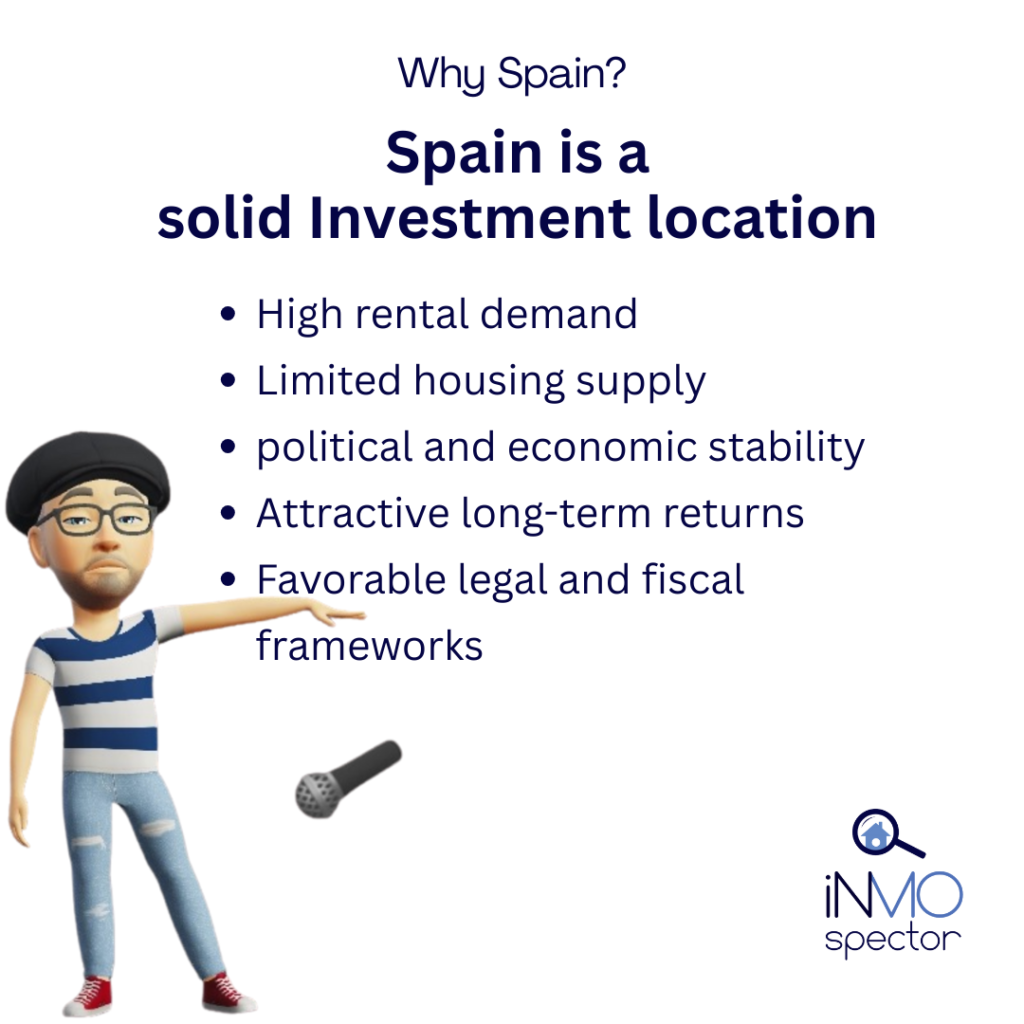
- High rental demand in urban centers and coastal regions has increased the attractiveness of buy-to-rent strategies.
- Limited housing supply, especially in major cities like Madrid, Barcelona, Valencia, and Málaga; but not only there…
- Spain’s political and economic stability relative to other EU countries, making it a safe haven for investment capital.
- Attractive long-term returns in comparison to low-yield traditional financial products.
- Favorable legal and fiscal frameworks for corporate entities and property investment vehicles.
This trend mirrors broader changes in European real estate, where housing is increasingly treated as a financial asset, not just a place to live.
🏠 What Does This Mean for Homebuyers in Spain?
Whether you’re a local buyer or a foreigner considering relocation or retirement in Spain, this shift has important consequences:
1. Increased Competition and Pressure on Supply
With companies actively competing for the same properties, private buyers may find fewer suitable homes available — especially in prime locations or with high investment potential.
2. Upward Pressure on Property Prices
The buying power of institutional investors contributes to sustained price increases, especially in the resale property market. This makes entry more difficult for first-time buyers or those with limited financing capacity.
3. Growth in Rental Offer — but Not Always Affordability
While corporate buyers tend to rent out rather than occupy their properties, this doesn’t automatically lead to affordable housing. Rents may increase as these companies seek high returns, particularly in cities with strong demand.
4. Changing Urban Dynamics
The rise in investor-owned housing may gradually transform neighborhoods — prioritizing short-term rental profitability over long-term community stability.

🧭 How Can Individuals Navigate This Changing Market?
While the market is shifting, it doesn’t mean individuals are out of options. But buying in 2026 and beyond may require a more strategic, data-driven approach.
Tips for homebuyers and private investors:
Conduct thorough property inspections to ensure sound investment decisions — particularly important when buying older homes. Yeah, what else am I going to suggest 😉
Evaluate energy efficiency and long-term maintenance costs — these are becoming key criteria in valuation and resale potential. Stick around for an article on new regulation taking effect in the early 2030’s !
Monitor market data regularly: pricing trends, supply levels, and changes in demand by region.
Consider alternative locations: properties in up-and-coming areas or near infrastructure projects may offer better value and less investor competition.
Work with independent advisors, not just sellers’ agents, to get a balanced view of market value and property condition.
Conclusion
The rise of institutional investors in Spain’s residential property market marks a structural shift that will likely continue in the years ahead. While this brings opportunities for capital inflows and rental growth, it also creates challenges for individuals seeking to purchase a home in competitive regions.
Being informed — not just emotionally ready — is key. By understanding the broader market dynamics, you can make decisions that align with your goals, whether you’re buying to live, to rent, or to invest.
