

Buying a property in Spain can be one of the best lifestyle and investment decisions you ever make. Whether you dream of a retirement home in Galicia, a coastal villa in Asturias, a countryside finca in Cantabria, or an investment property elsewhere in Spain, the process can feel very different from what foreign buyers are used to.
Many international buyers assume the process works similarly to their home country. Unfortunately, this is where costly mistakes happen.
Spain has its own legal structures, documentation systems, urbanistic regulations, and buying customs. Understanding them before signing anything can save you thousands of euros and months of stress.
At iNMOspector, we help foreign buyers throughout Spain navigate the process safely through independent inspections, urbanistic checks, legal coordination, and post-purchase support.
Here is the real buying process you should understand before purchasing property in Spain.
Step 1: Finding the Right Property
Most buyers begin by searching through estate agents or online portals.
This is where expectations and reality often collide.
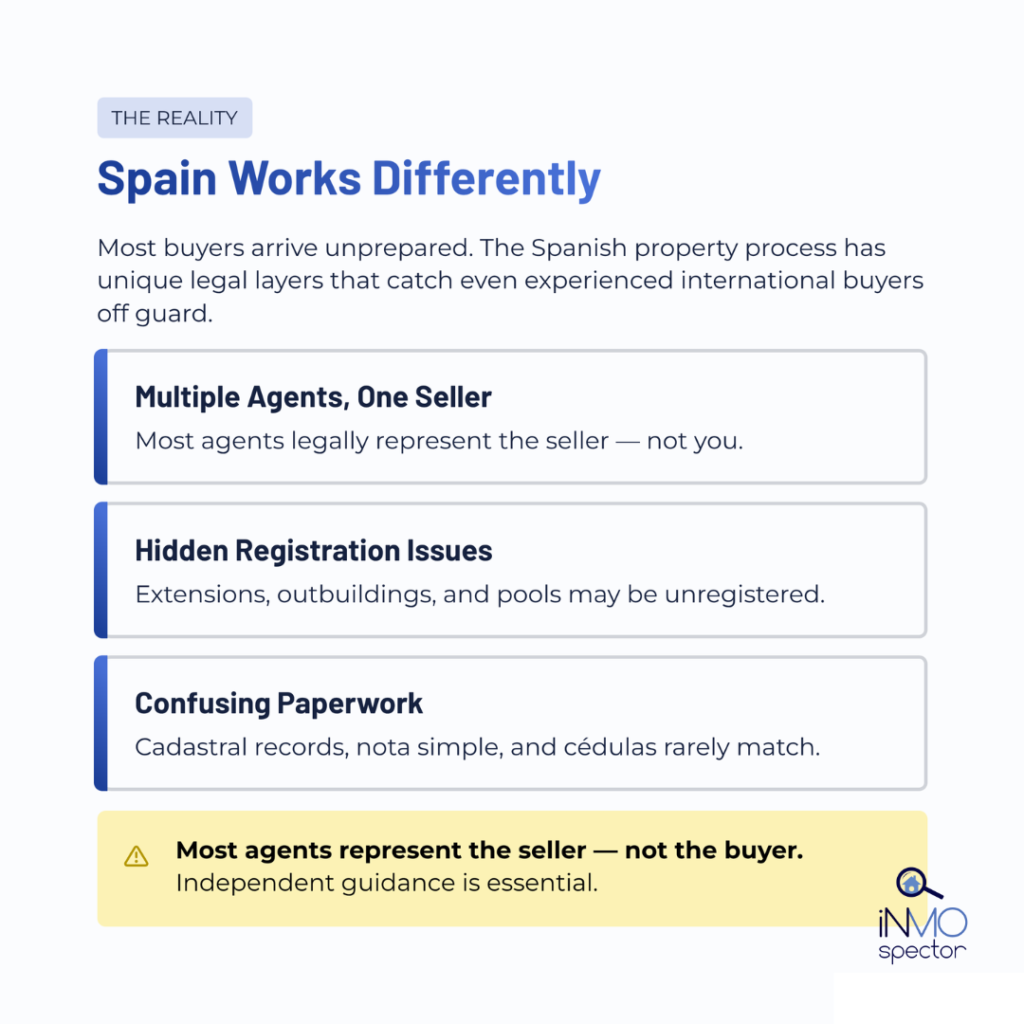
Unlike some countries, estate agents in Spain usually represent the seller, not the buyer. Their primary objective is to close the sale. That does not mean agents are dishonest, but buyers should understand that agents are not independent advisors.
Many foreign buyers are surprised by:
- incomplete property information
- inaccurate floor sizes
- missing registrations
- outdated descriptions
- undocumented renovations
- illegal structures
- unclear boundaries
This is why independent verification becomes essential later in the process.
When evaluating properties, consider:
- registration status
- urbanistic legality
- access rights
- utility connections
- septic systems
- roof condition
- humidity issues
- insulation
- structural movement
- renovation potential
A beautiful view does not protect you from legal or structural problems.
Step 2: Independent Technical and Urbanistic Inspection
This is one of the most important stages of the entire buying process.
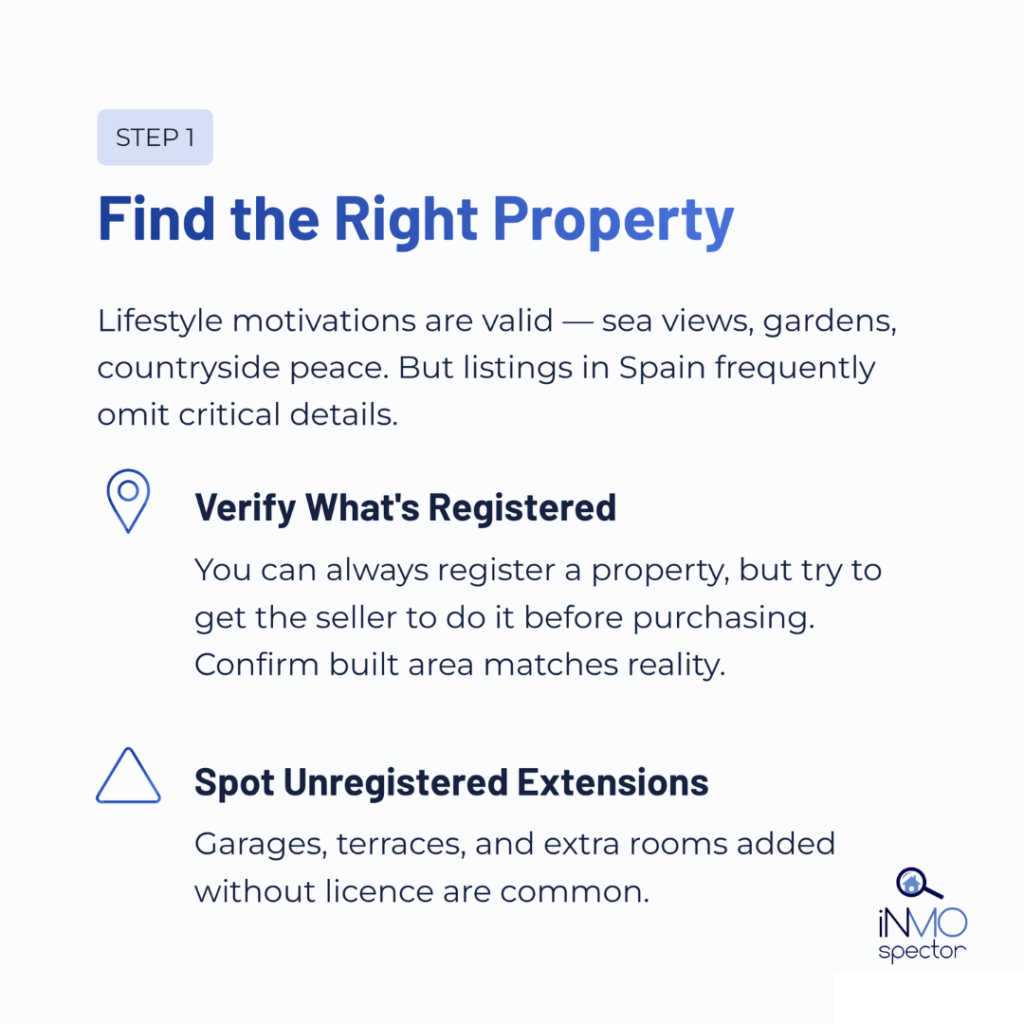
Before signing contracts or transferring money, buyers should obtain an independent property inspection.
At iNMOspector, these inspections can include:
- technical building inspections
- urbanistic reports
- market valuations
- pest diagnosis
- moisture analysis
- energy efficiency evaluations
The purpose is simple:
Understand exactly what you are buying.
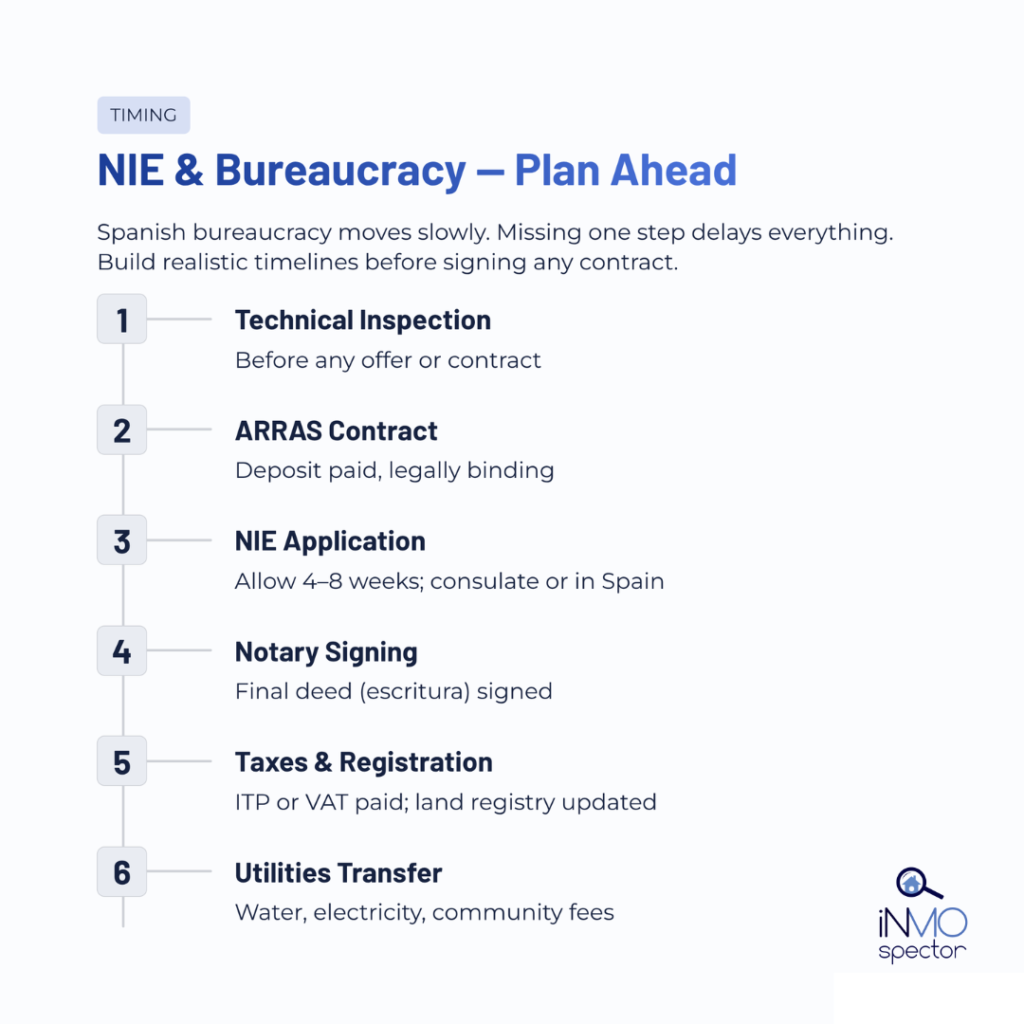
Many issues are invisible during normal viewings:
- hidden humidity
- roof failures
- structural cracks
- illegal extensions
- non-registered buildings
- septic problems
- termite damage
- unsafe electrical systems
For rural properties especially, urbanistic verification is crucial.
Some buildings or extensions may:
- not be registered
- violate planning regulations
- lack habitation permissions
- create future legal complications
An inspection is not just about avoiding problems. It is also a negotiation tool.
If defects are discovered, buyers can often renegotiate the price fairly before moving forward.
This step alone can save buyers far more money than the inspection itself costs.
Step 3: Negotiating the Price
Once inspections reveal the true condition of the property, negotiations should begin.
This is where many foreign buyers make emotional decisions instead of informed decisions.
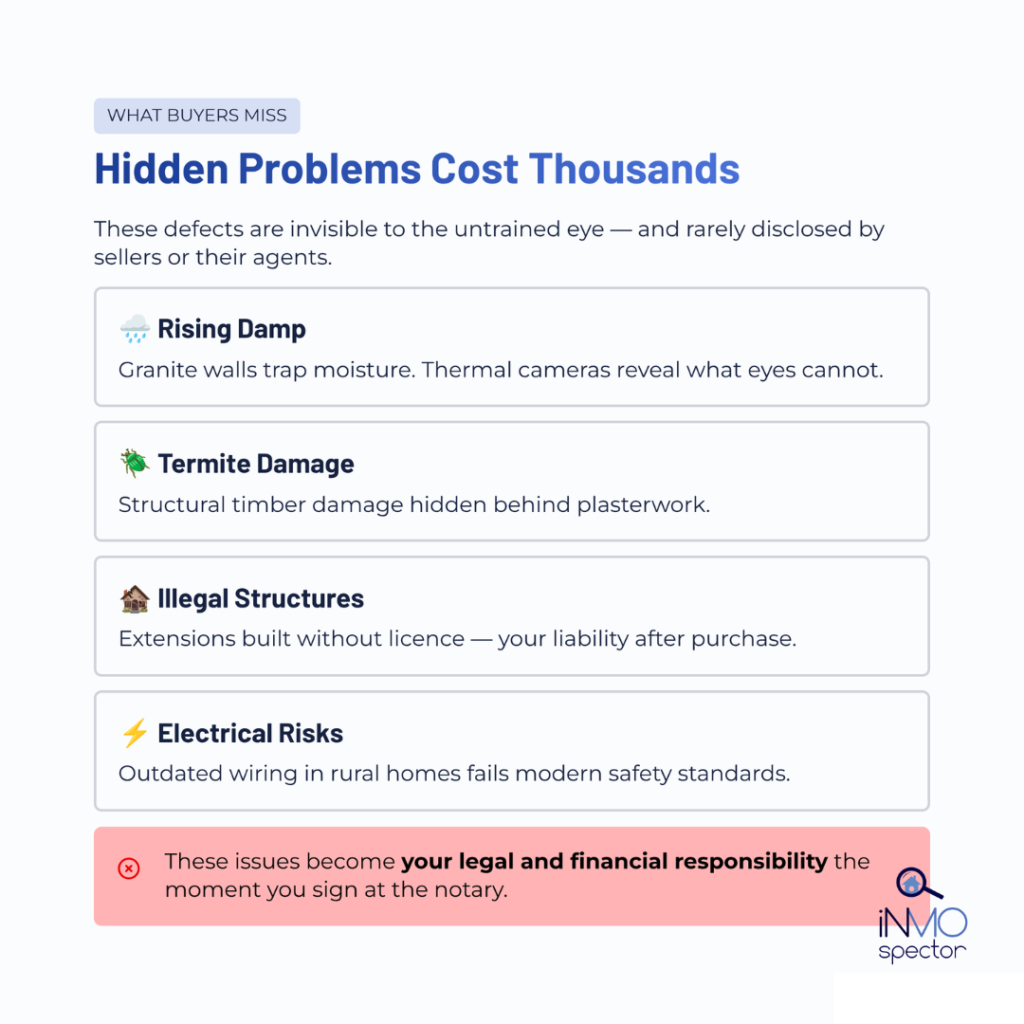
If repairs are needed, they should be quantified realistically:
- roof repairs
- electrical upgrades
- structural stabilization
- insulation improvements
- legalization procedures
- drainage corrections
A professional inspection gives buyers objective leverage during negotiations.
The goal is not to “win” against the seller. The goal is to reach a fair price based on reality.
Step 4: The ARRAS Contract — The Most Important Step
The Contrato de Arras is one of the most misunderstood documents in Spanish real estate.
It is a private pre-contract signed before the final notary purchase.
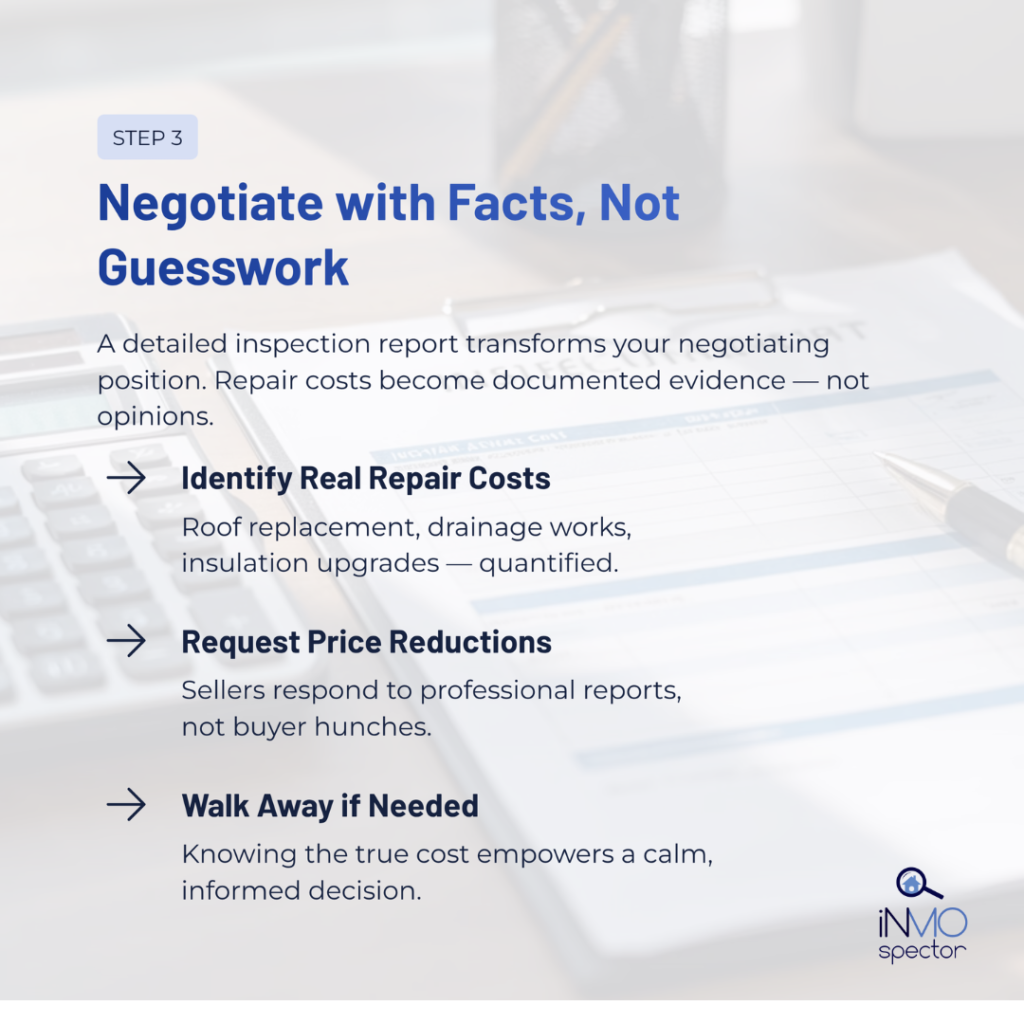
This document defines:
- purchase price
- deadlines
- deposits
- obligations
- penalties
- conditions of sale
Unfortunately, many arras contracts are downloaded from the internet or reused from previous transactions without proper legal adaptation.
This creates enormous risks.
At iNMOspector, we strongly recommend having the arras contract reviewed by an independent lawyer.
One of the safest forms is usually the arras penitenciales.
This structure generally means:
- if the buyer withdraws without valid reason, they lose the deposit
- if the seller withdraws, they must return double the deposit
This creates balanced protection for both parties.
The arras contract should also include:
- realistic deadlines
- NIE processing considerations
- financing conditions if applicable
- legalization obligations
- inventory agreements
- registration commitments
- repair agreements
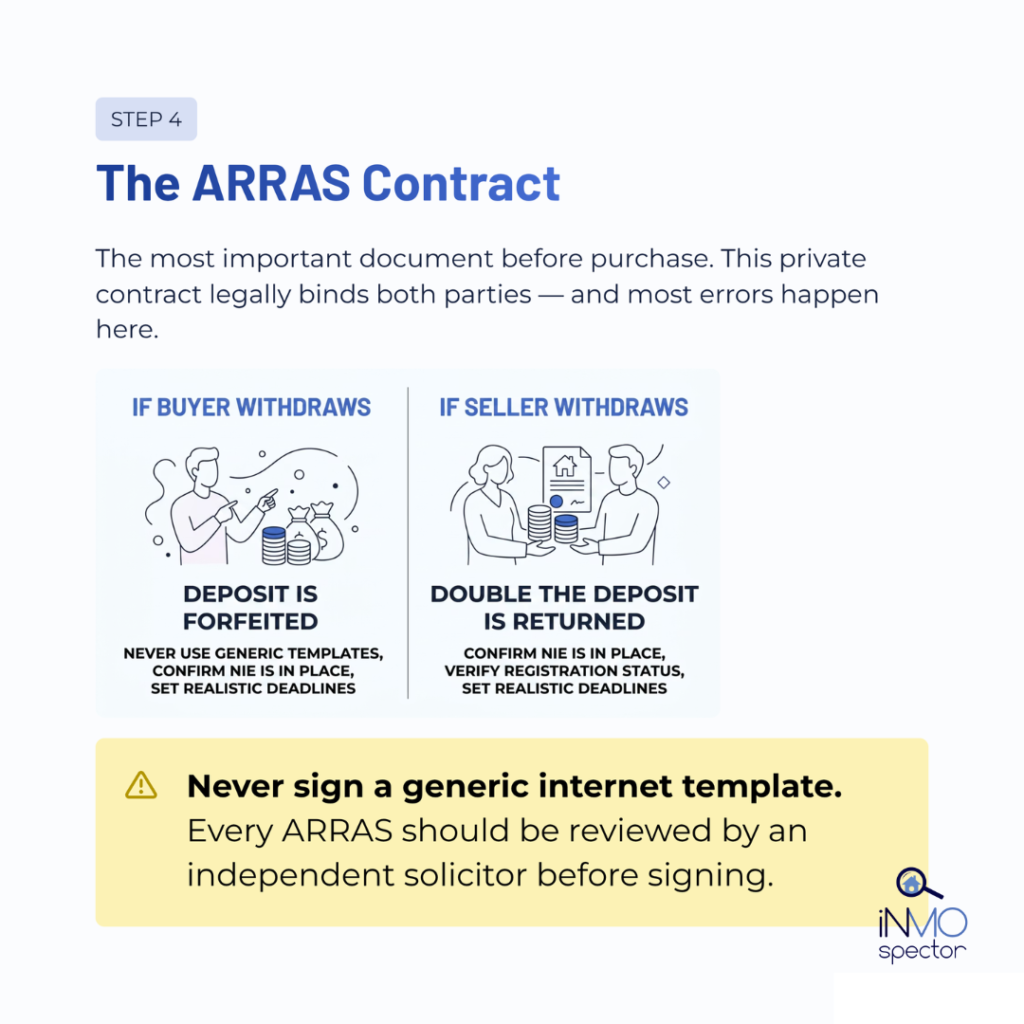
A common problem for foreign buyers is underestimating how long obtaining the NIE can take.
Without the NIE, buyers cannot complete the final notary signing.
If deadlines are unrealistic, buyers may accidentally breach the contract and lose their deposit despite acting in good faith.
This is why proper legal drafting matters enormously.
Step 5: Preparing for the Notary
Before signing at the notary, buyers should verify:
- the property registration
- debts and charges
- cadastral consistency
- utility situations
- seller identity
- legal documentation
Ideally, all structures should already be registered before completion.
If not, buyers should ensure the seller either:
- completes the registration beforehand
or - provides all required legalization documentation for future registration
Trying to solve missing registration issues after purchase is usually more complicated and expensive.
Step 6: Signing at the Notary
The final purchase is completed before a Spanish notary.
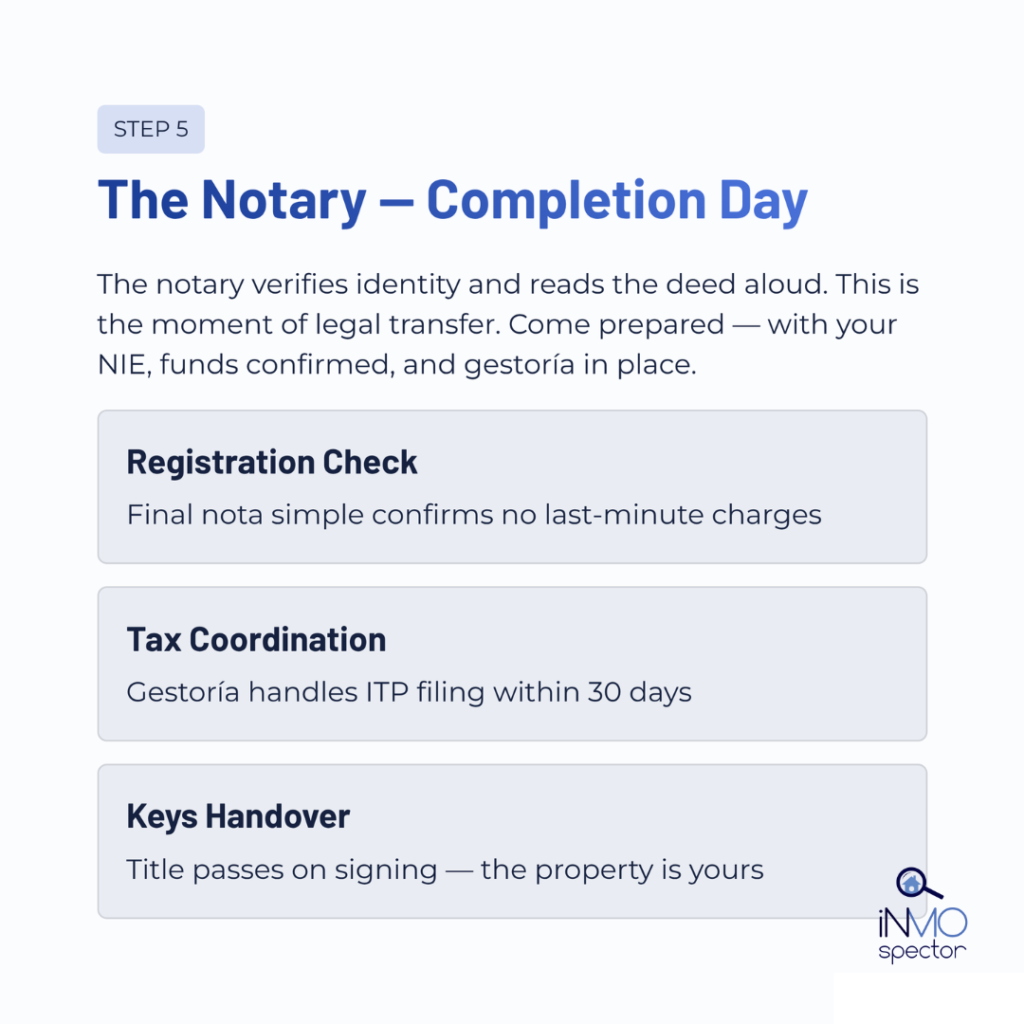
At this stage, buyers must usually have:
- NIE number
- passport
- payment documentation
- proof of funds
- banking arrangements
After signing:
- taxes become payable
- registration begins
- ownership transfer is initiated
The notary often collaborates with a gestoría that handles:
- tax payments
- registrations
- administrative processing
This is generally the safest and easiest approach for foreign buyers.
Typically, buyers leave an estimated amount with the gestoría. After all taxes and registrations are finalized, unused funds are refunded.
Immediately after signing, buyers receive an authorized copy of the deed.
Later, after registration is completed officially, buyers receive the final registered title deed.
Step 7: Utilities and Post-Purchase Setup
After the purchase, buyers must transfer:
- electricity
- water
- gas
- internet
- local tax registrations
The NIE is also required for most utility contracts.
Depending on the municipality, procedures differ slightly.
This is also when many buyers begin:
- renovations
- energy upgrades
- solar installations
- restorations
- licensing applications
At iNMOspector and iNMObuilder, we continue supporting clients after the purchase with technical advice, project management, renovations, and contractor coordination throughout Spain.
Final Thoughts
Buying property in Spain should be exciting — not stressful.
The safest buyers are not the fastest buyers.
They are the best-informed buyers.
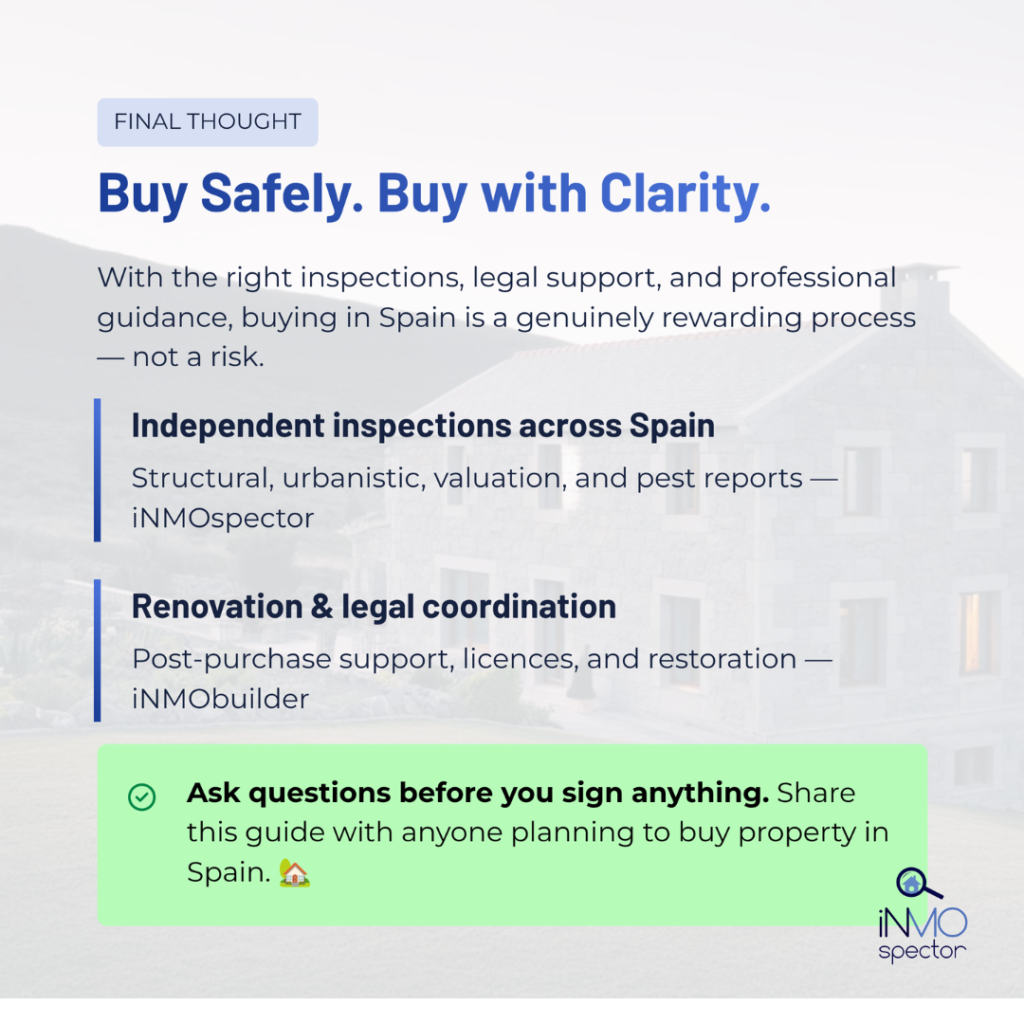
Independent inspections, legal verification, proper arras contracts, and realistic timelines are what protect your investment long-term.
Every property is different.
Every municipality is different.
Every buyer situation is different.
That is why personalized guidance matters.
If you are thinking about buying property in Spain and want independent support throughout the process, iNMOspector is happy to help.