

There’s a strategy that used to work reasonably well for buying property in Spain: find something in your price range, don’t worry too much about the exact condition, and figure out the renovation as you go. If it cost a bit more than expected, or took longer than planned, the price you paid usually left enough room to absorb it.
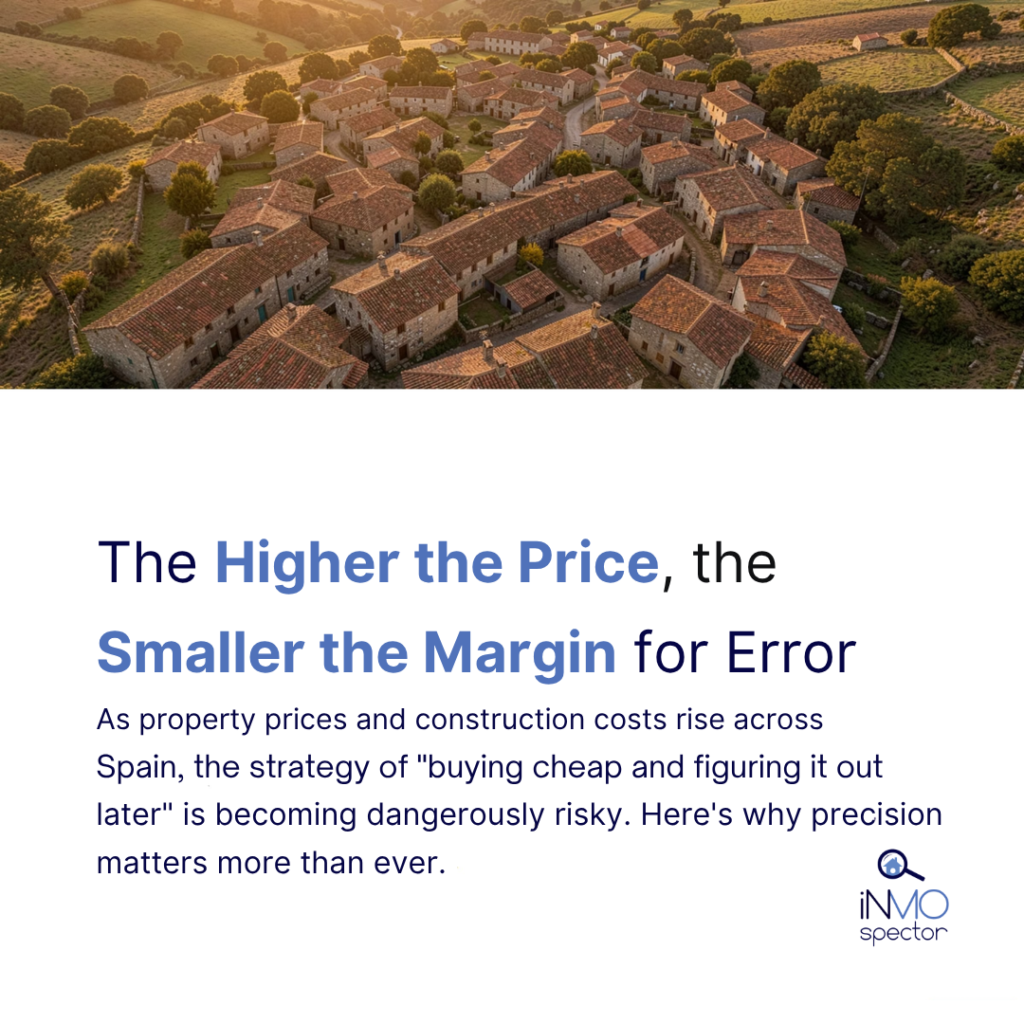
That strategy is becoming a lot riskier, and the reason is simple: as prices rise, margins shrink. Not just financial margins, either. Time is money, and the safety net that used to cover “we’ll sort it out later” is thinner than it used to be, for buyers at every budget level.
What “margin” actually means when you buy a property
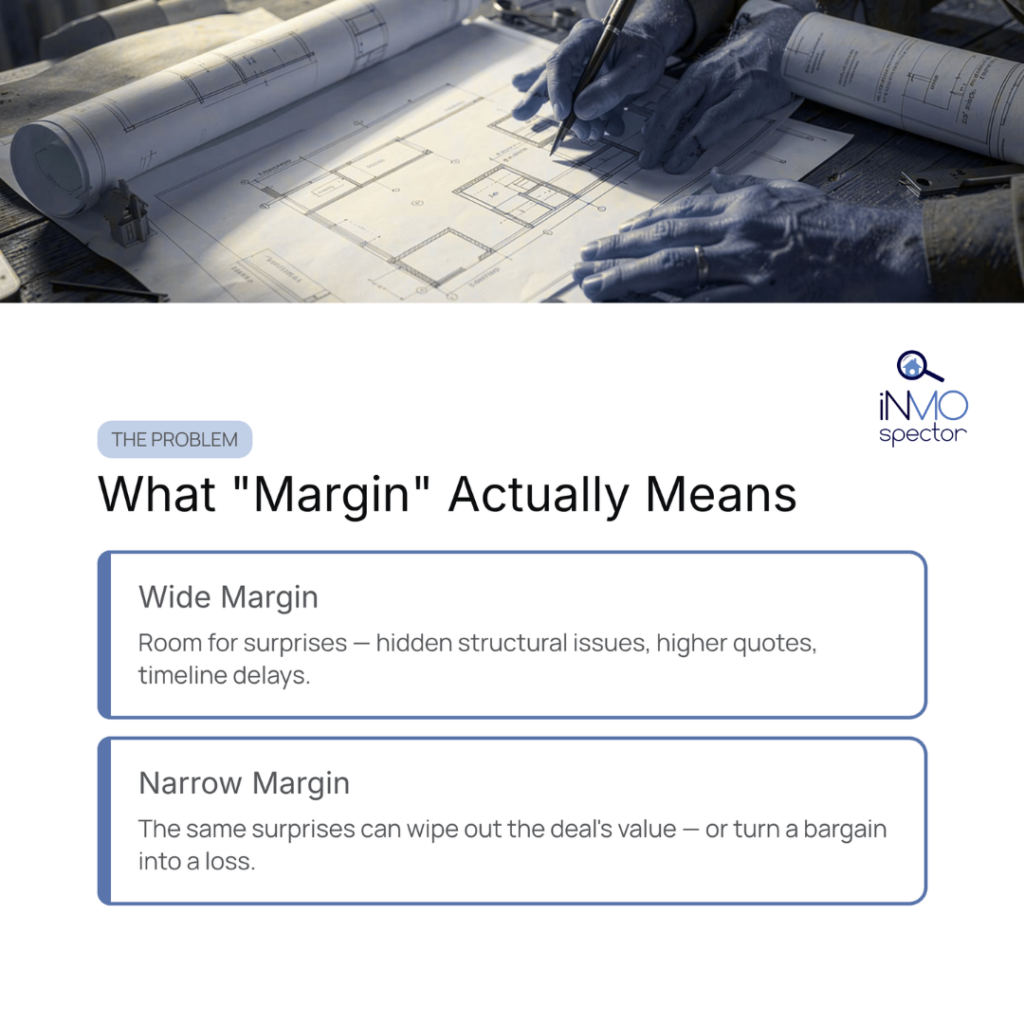
When people talk about a good property deal, they usually mean the gap between what a property costs and what it’s actually worth — including the cost of whatever work it needs. A wide margin means there’s room for a surprise: a foundation issue nobody flagged, a renovation quote that comes in higher than the estimate, a timeline that stretches from six months to fourteen. A narrow margin means the same surprises can wipe out the value of the deal entirely, or turn what looked like a bargain into a loss.
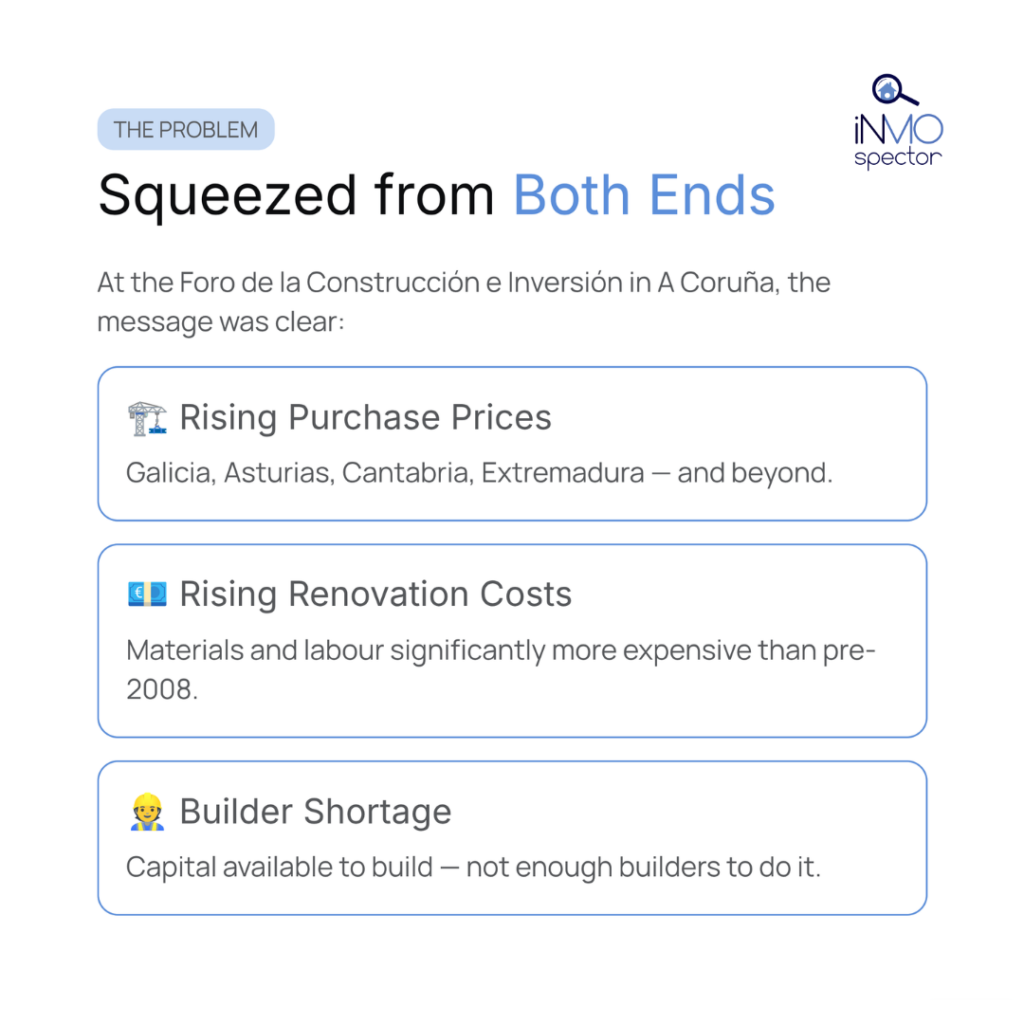
Prices in the regions we work in — Galicia, Asturias, Cantabria and Extremadura, and increasingly across the rest of Spain — have been climbing. So have construction costs. We heard this directly and unambiguously at this year’s Foro de la Construcción e Inversión in A Coruña: there’s capital available to build, there aren’t enough builders to build it, and materials and labour have both become significantly more expensive than they were before the 2007/2008 crisis. Put those two things together — rising purchase prices and rising renovation costs — and the margin that used to protect buyers from their own uncertainty is getting squeezed from both ends.
Time is money — and it’s part of the margin too
It’s easy to think about margin purely in euros: the difference between the purchase price and the eventual value. But time belongs in that calculation just as much as money does.
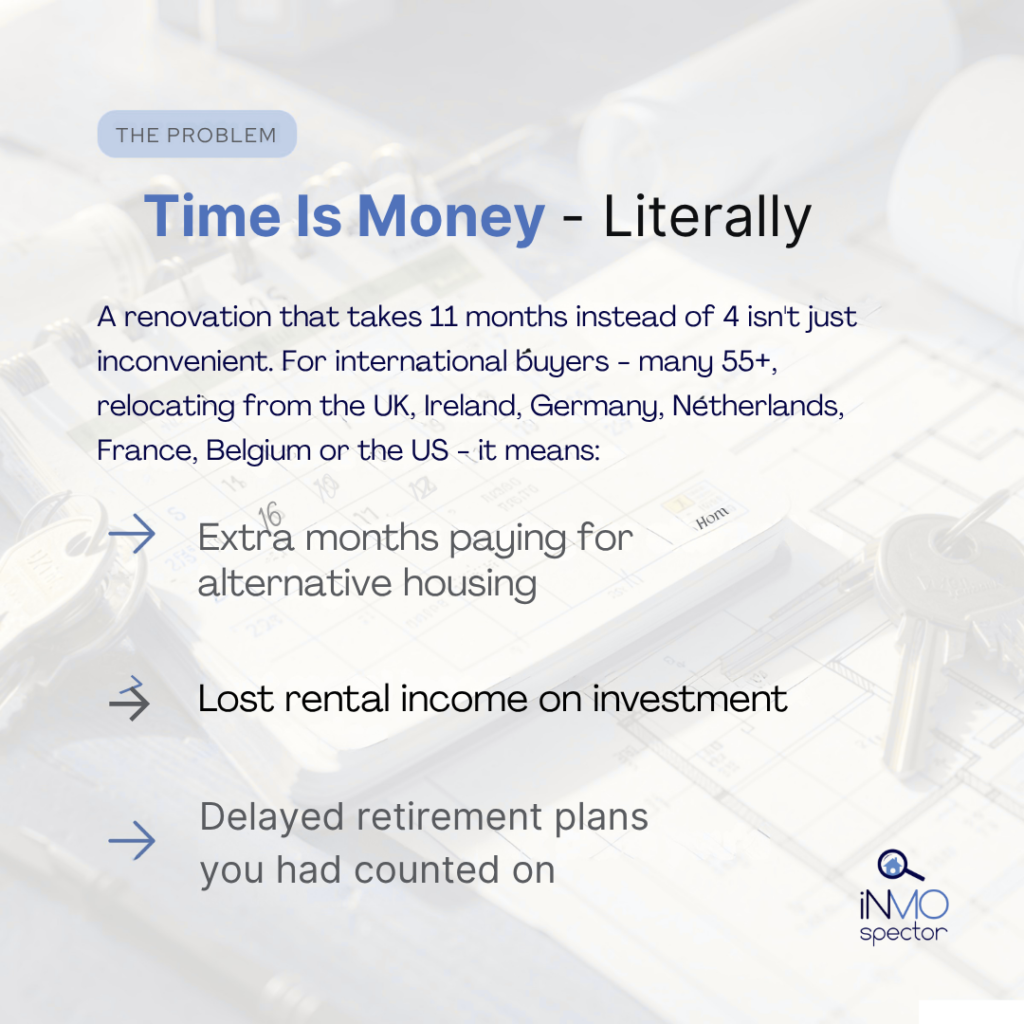
A renovation that was supposed to take four months and takes eleven isn’t just inconvenient. It means four, six, eight extra months of paying for somewhere else to live, or losing rental income on a property you bought as an investment, or simply not being able to use the home you bought to retire into, for a season or two you’d planned to enjoy. For buyers relocating from the UK, Ireland, Germany, the Netherlands, France, Belgium or the US — many of them 55 or older, and many with a specific timeline in mind for retirement or relocation — that lost time carries a real cost, even when it doesn’t show up on an invoice.
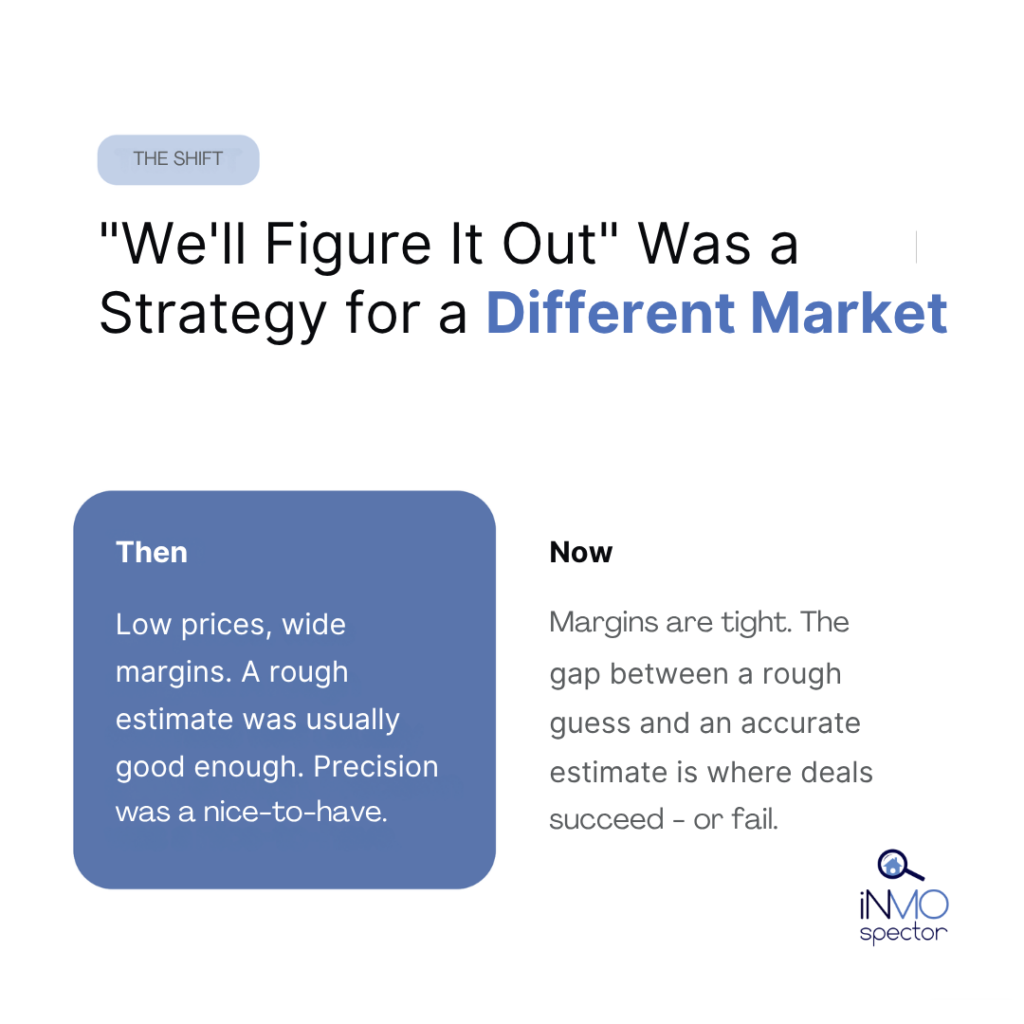
“We’ll figure it out” was a strategy for a different market
Buying cheap and improvising the renovation wasn’t a bad approach when prices were low enough, and margins wide enough, to absorb the difference between a rough estimate and reality. In that market, precision was a nice-to-have. Getting it roughly right was usually good enough.
That’s no longer a safe assumption. As margins tighten, the gap between a rough estimate and an accurate one stops being a minor inconvenience and starts being the difference between a good investment and a costly mistake. This doesn’t mean anyone can, or should, aim for 100% precision before they commit — that’s never been realistic, and it never will be. Every renovation carries some uncertainty. But there’s a real difference between an estimate built on an honest structural assessment and a realistic scope of works, and one built on a hopeful guess and a listing photo. At today’s prices, that difference is exactly where deals succeed or fail.

Where this hits hardest: the mid-market buyer
This matters most for the roughly nine in ten international buyers working with a budget under €500,000 — the majority of the market we serve. At this budget level, there’s usually no spare room for a five- or six-figure surprise. A renovation that comes in significantly over budget, or a structural issue that wasn’t caught before signing, can consume a share of the total budget large enough to change the entire calculation: whether the purchase still makes sense, whether the renovation is still worth doing, whether the retirement plan built around this property still works.
For buyers with larger budgets — something we see more often among our German clients — the stakes scale up rather than disappear. A bigger investment simply means a bigger number is riding on the accuracy of the information behind it.
Why buyers’ top concerns line up exactly here
International buyers consistently tell us their biggest worries when buying in Spain are finding the right property, finding legal and professional support they can trust, and not knowing whether the agent showing them a property is actually working in their interest. All three concerns point to the same underlying problem: uncertainty about whether the numbers you’re being shown are the real ones.
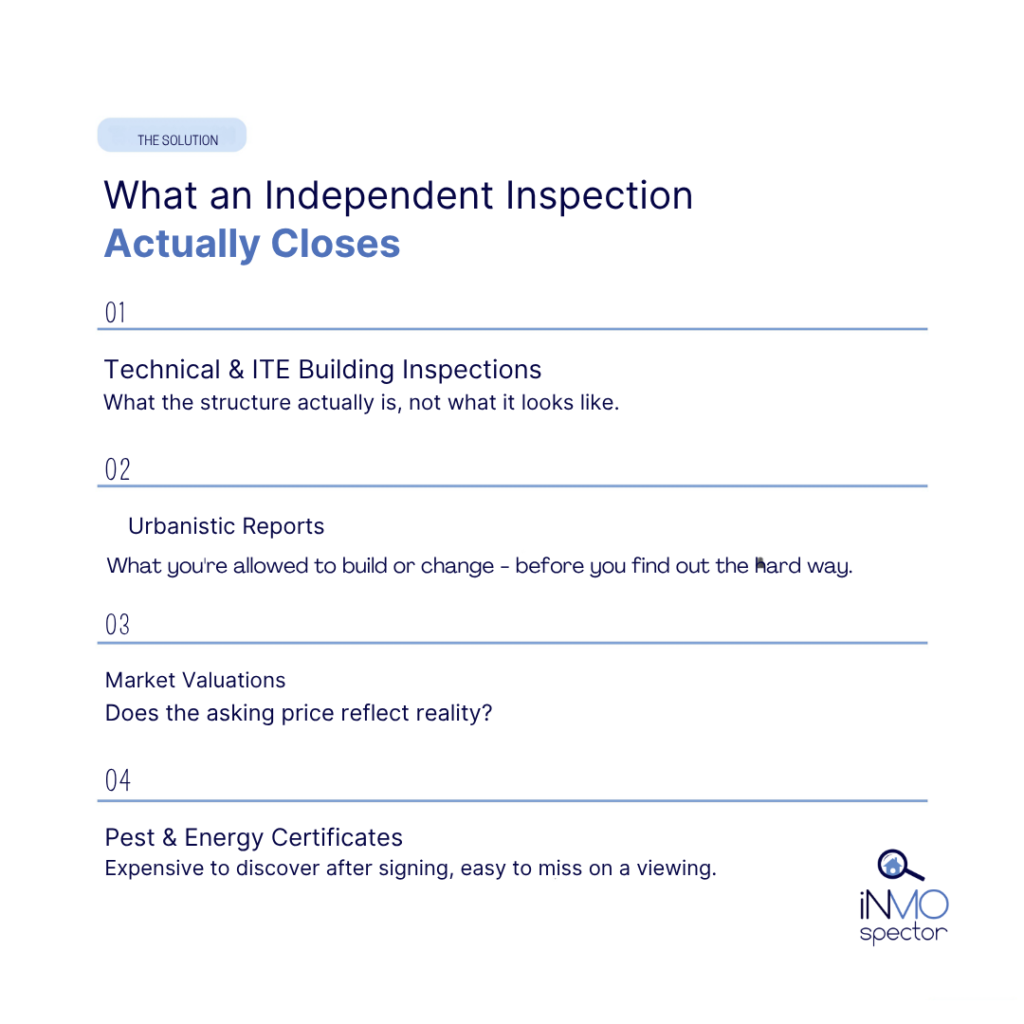
This is precisely the gap an independent inspection closes. Our technical inspections — from a straightforward home check to a full ITE building inspection — tell you what a property’s structure actually is, not what it looks like from the outside. Urbanistic reports tell you what you’re actually allowed to build or change, before you find out the hard way. Market valuations tell you whether the asking price reflects reality. Pest diagnoses and energy efficiency certificates round out the picture, covering the parts of a property’s condition that are easy to miss on a viewing but expensive to discover afterward.

Precision doesn’t mean certainty — it means closing the gap
No inspection can promise you a renovation will come in exactly on budget, exactly on schedule. What it can do is replace guesswork with an honest, evidence-based estimate — close enough to reality that you’re making a decision based on facts, not hope. As margins tighten, that difference is worth more than it used to be, at every point in the process: before you make an offer, when you’re negotiating the arras (the pre-contract deposit agreement) and reviewing the escritura (the final purchase deed) with our partner lawyers, and afterward, when our sister company iNMObuilder helps you find the right builder and manage the actual renovation, licence applications and installations — whether that’s a full restoration or a heat pump and photovoltaic system.
The takeaway
The size of your budget was never really what determined whether a property purchase in Spain worked out. The accuracy of the information behind your decision was — and as prices and construction costs rise together, that accuracy matters more with every passing month, not less. Buying cheap and hoping the renovation sorts itself out is a strategy for a market with wide margins. That market is behind us.
If you’re weighing a property purchase or a renovation project in Galicia, Asturias, Cantabria, Extremadura or anywhere else in Spain, let’s make sure the numbers you’re working from are the real ones, before you commit.